
Why Small Batch Gourmet BBQ Rubs Cost More Than Store-Bought (And Why They're Worth It)
Hey there, fellow pitmasters! I get this question a lot at farmers markets and BBQ competitions: "Nate, why does your Sweet Amber Fire cost more than the stuff I can grab at the grocery store?"
It's a fair question, and honestly, I love answering it because it gives me a chance to pull back the curtain on what really goes into crafting quality BBQ rubs. After years of perfecting my blends and building Nate's Smokehouse BBQ Blends from the ground up, I've learned there's a world of difference between what I'm doing in small batches and what the big food companies are pumping out by the truckload.
The Real Cost of Real Ingredients
Let me start with the foundation – ingredients. Mass-market rubs often lean on low-cost fillers and pre-ground spices that have been sitting around losing aroma. That keeps prices down, sure, but it dulls the flavor. I choose high-quality, fresh spices and clean ingredients only—no shortcuts, no padding with cheap bulking agents—so what you taste is real, not masked or watered down.
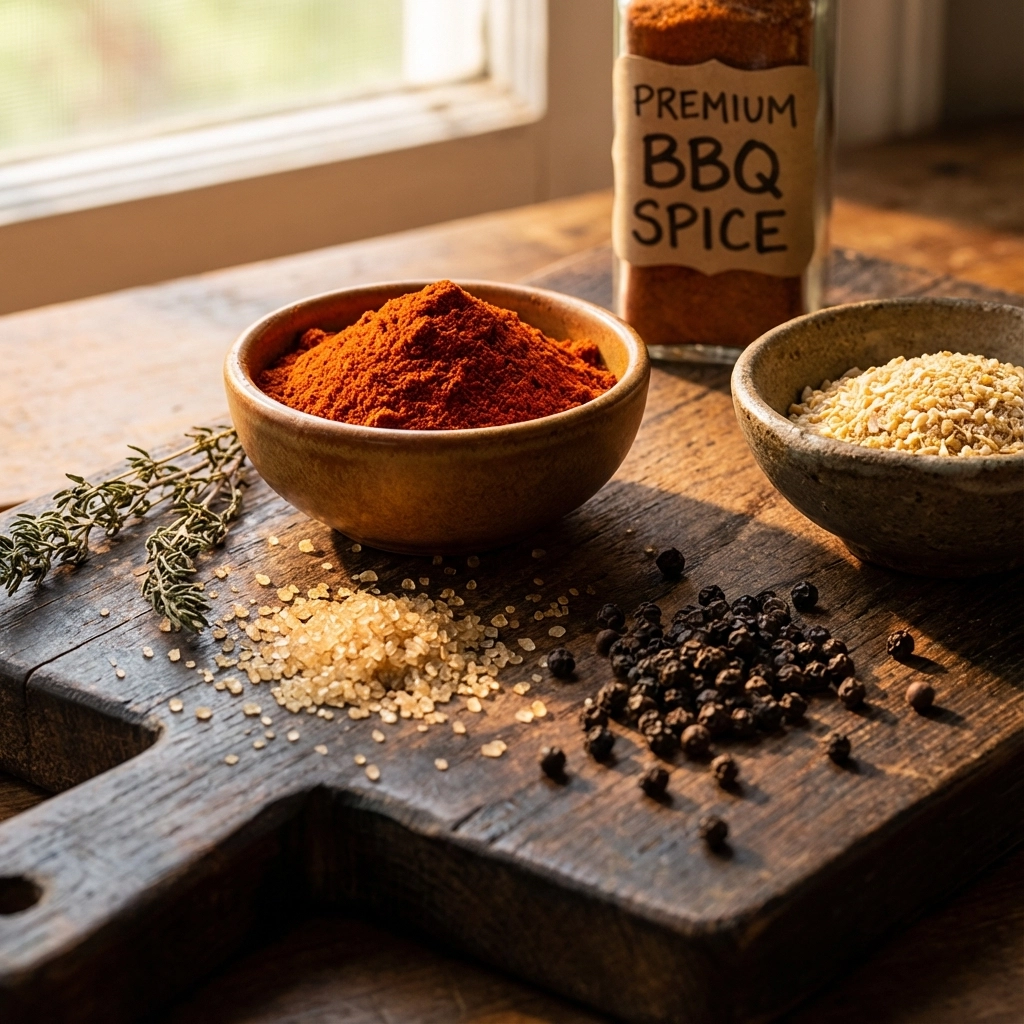 I ask for current-crop ingredients, sample for potency, color, and aroma, and reject anything that doesn’t meet my standards. I also have spices milled to my grind specs close to blending time (freshly milled spices carry their essential oils better), then I blend in small batches so turnover stays fast.
All of that attention means you get a jar that pops the second you crack the lid—bright aroma, clean heat, balanced sweetness and savoriness—without the stale, dusty notes you get from pre-ground, warehouse-aged blends. Fresher, better ingredients cost more, but they perform better on the pit and let you use less to get more flavor.
Small Batch Means Small Margins, Big Quality
Here's something most folks don't realize: when you're making BBQ rubs in small batches, your cost per pound goes up dramatically. I'm mixing 50-pound batches in my commercial kitchen, not 5,000-pound batches in an automated facility. That means I'm paying more for ingredients because I'm not getting those massive volume discounts. But you know what? It also means I can taste every single batch before it goes out the door.
I literally taste-test every batch of batch of rubs I create. Can McCormick or other big brands say the same? Not a chance. When you're cranking out thousands of pounds at a time, quality control becomes about lab tests and statistical sampling, not actual flavor.
This hands-on approach means I catch problems before they reach your kitchen. Last month, I had a supplier send me some cumin that was just... off. Nothing wrong with it technically, but it didn't have that warm, earthy note I needed for my All Purpose Rub. In a big operation, that batch might have made it to market. In mine? I sent it back and waited for the good stuff.
The Labor of Love (And It Really Is Labor)
Big store brands use mass production where everything's automated. Huge silos dump predetermined amounts into industrial mixers, and the whole process is run by computers. Efficient? Absolutely. Personal? Not even close.
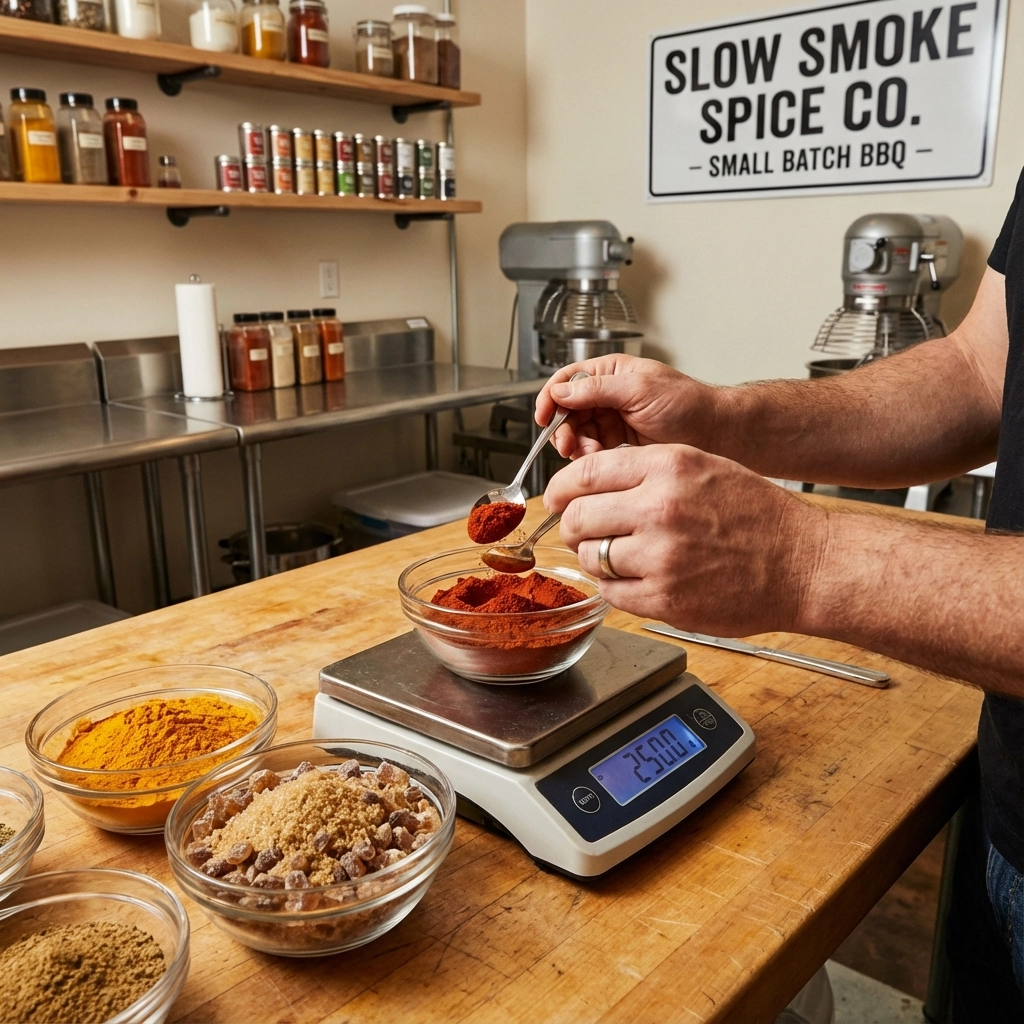 When you buy one of my BBQ rubs, you're getting something that passed through my hands multiple times. I checked the color, tested the aroma, and made sure the texture was exactly right. That level of personal involvement simply can't scale to mass production – and it shouldn't.
Consistency That Actually Matters
Now, here's where it gets interesting. Big food companies love to talk about consistency, and they're not wrong – their products are remarkably consistent. The problem is they're consistently mediocre.
True consistency in BBQ seasoning isn't just about every jar tasting the same (though that's important). It's about every jar performing the same way on your meat. My Sweet Amber Fire will give you the same beautiful bark development, the same penetration into the meat, and the same flavor balance whether you're cooking chicken thighs or a full packer brisket.
This kind of functional consistency comes from understanding how each ingredient behaves under heat, how they interact with proteins, and how the grind size affects absorption. It's knowledge that comes from years of trial and error, not from a computer program optimizing for shelf life and cost.
Why Fresh Actually Matters
Spices lose potency over time – that's just science. The essential oils that provide flavor and aroma start breaking down the moment spices are ground. Mass-produced rubs might sit in warehouses for months before hitting store shelves, then sit on those shelves for months more.
My BBQ rubs are made in small batches specifically so they reach you fresh. Most of what I sell was mixed within the past month, sometimes within the past week. That freshness translates directly to better flavor in your food.
I've had customers tell me they could taste the difference immediately. One guy at a competition told me my rub made his pork ribs taste like they had more smoke flavor, even though he didn't change anything else about his cook. That's the power of fresh, properly balanced spices.
The Value Equation
So yes, my gourmet BBQ rubs cost more than what you'll find at the grocery store. But let's talk about value for a minute. A typical jar of my seasoning will season 15-20 pounds of meat, depending on how heavy-handed you are. That breaks down to maybe 75 cents per pound of meat – less than you'd pay for a decent barbecue sauce.
But here's the real value: when you use quality BBQ seasoning, you're not just flavoring your meat – you're transforming it. The difference between a $6 store-bought rub and my $12 small-batch blend isn't just $9. It's the difference between okay BBQ and BBQ that makes your neighbors lean over the fence asking what your secret is.
Supporting Small Business Means Supporting Quality
When you buy from small-batch producers like Nate's Smokehouse BBQ Blends, you're not just getting better seasoning – you're supporting a different way of doing business. You're supporting someone who cares more about quality than quarterly profits, who's willing to source better ingredients even if it costs more, and who takes personal responsibility for every jar that goes out the door.
Every time I sell a jar of Smoky Orchard, I know that customer trusted me with their weekend cook, their family gathering, or their attempt to impress the in-laws. That responsibility keeps me honest and keeps me improving.
The bottom line? Small-batch gourmet BBQ rubs cost more because they're worth more. Better ingredients, personal attention, proven recipes, and fresher products – that's not marketing speak, that's just the reality of how we do business.
Next time you're standing in the spice aisle debating whether to spend a few extra bucks on quality BBQ seasoning, remember: your backyard BBQ recipes deserve better than whatever's cheapest. They deserve the good stuff.